To excel as a raid leader in WoW, you need strategic planning, effective communication, and situational awareness. You’ll set clear goals for each raid, manage resources, and study encounter mechanics in-depth. Communication is key: provide clear instructions, listen actively, and give constructive feedback to motivate your team. Stay observant during fights, managing player positioning and cooldowns efficiently. Also, handle conflicts diplomatically and keep team morale high with positive reinforcement. Encourage adaptability by adjusting strategies on the fly and promoting role flexibility. Mastering these qualities guarantees your team thrives through the toughest challenges. Stick around to uncover more secrets.
Key Takeaways
- Strategic Planning: Anticipate challenges, analyze encounters, and set clear raid objectives.
- Effective Communication: Deliver clear instructions and foster a feedback loop to improve team performance.
- Situational Awareness: Monitor environmental cues and manage cooldowns effectively to optimize raid success.
- Conflict Resolution: Address disputes impartially and establish clear expectations to maintain focus.
- Motivating and Building Morale: Use positive reinforcement and recognition moments to boost team spirit and engagement.
Strategic Planning
Strategic planning is the very cornerstone of successful raid leading in WoW. You must employ tactical foresight to anticipate challenges and identify the best paths forward. Start by performing detailed encounter analysis to understand each boss’s mechanics and the role specialization required for your team. Once you’ve gathered this intel, focus on resource management, ensuring that potions, flasks, and other consumables are adequately stocked.
Objective prioritization is key—set clear goals for each raid night, be it downing a new boss or refining your strategy for cleaner execution. Enhance team synergy by assigning roles and positioning to maximize efficiency and safety. Utilize cooldown efficiency, ensuring major abilities and defensive cooldowns are used at prime moments to mitigate risk.
Engagement strategies need meticulous planning. Decide in advance when to use Bloodlust, Heroism, or other powerful buffs. Risk assessment will help you determine when to push phases versus when to play it safe. Don’t forget contingency planning; have backup plans for unexpected events, like a healer going down or a DPS falling behind on mechanics.
Effective Communication
After laying out a solid strategic plan, it’s imperative to focus on effective communication, the backbone of any successful raid. Use clear instructions and concise messaging to guide your team through complex encounters. Verbal clarity is vital, as muddled directions can lead to costly errors.
Here are key aspects of effective communication:
| Aspect | Explanation | Benefit |
|---|---|---|
| Active Listening | Pay close attention to team members’ inputs and concerns. | Creates a feedback loop |
| Constructive Feedback | Offer actionable insights without criticism. | Enhances performance |
| Confidence Building | Encourage and support team members to boost morale. | Improves team cohesion |
Incorporate emotional intelligence to read your team’s moods and respond appropriately. Body language, though not always visible in an online environment, can still be understood through vocal tones. Use respectful tones to maintain a positive atmosphere. Clear role clarity guarantees everyone knows their responsibilities, minimizing confusion during hectic moments.
Situational Awareness
In the heat of a raid, situational awareness isn’t just valuable—it’s indispensable. You need a keen eye for environmental cues, like boss animations or area changes, which often signal key moments or attacks. Player positioning plays a significant role; keeping everyone strategically placed optimizes both damage output and survivability. Boss mechanics shift dynamically, requiring you to anticipate and react accordingly.
Effective threat management guarantees the tank maintains aggro, preventing DPS or healers from being targeted. Cooldown awareness is important, allowing you to time defensive abilities precisely when they’re needed most. Each player’s role responsibilities must be clear and executed flawlessly; this synchronization is fundamental for overcoming complex encounters.
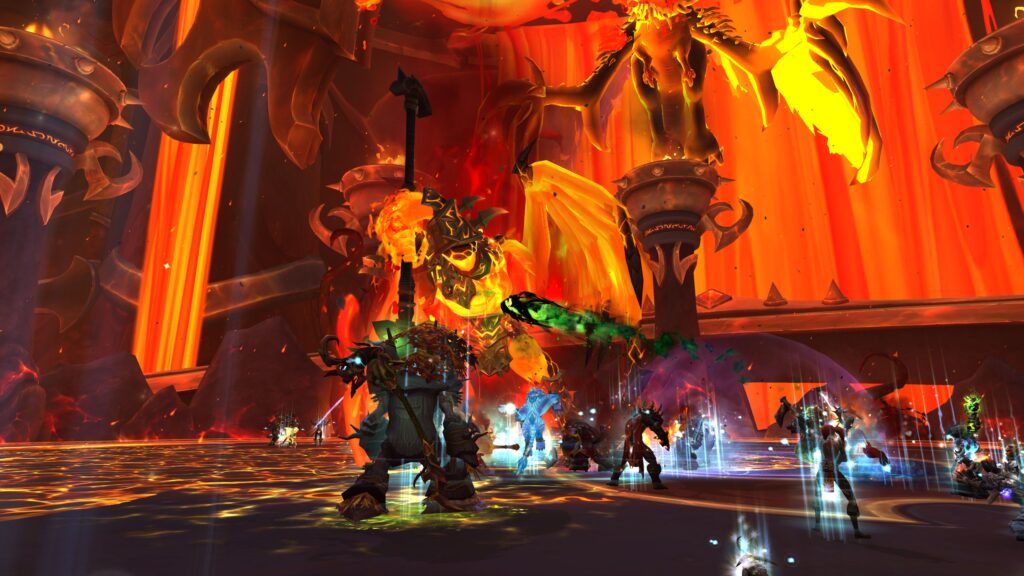
Situational adaptability lets you switch tactics on the fly. Maybe a healer gets incapacitated or the tank falls; you need to adjust instantly, reallocating roles and revising strategies. Map awareness helps you utilize the raid area to your advantage, identifying safe zones or hazard areas instantaneously.
Maintain sharp visual focus; a single missed cue can cause a wipe. Timing precision, like timing heals or coordinating burst damage phases, is the final keystone in achieving a well-executed raid. Stay aware, stay adaptable, and lead your team to victory.
Conflict Resolution
Handling player disputes and mediating strategy differences are key aspects of raid leading that you can’t overlook. You’ll need to stay neutral, actively listen to both sides, and propose solutions that prioritize the group’s success. Your ability to resolve conflicts swiftly and fairly can make or break your team’s cohesion and performance.
Handling Player Disputes
Guiding player disputes in a WoW raid is as essential as mastering boss mechanics; it demands a keen understanding of conflict resolution skills. First, employ diplomatic interventions. When tempers flare, staying calm and objective can make all the difference. Intervene swiftly, acknowledging each player’s perspective without bias. Offer solutions that address core issues, ensuring everyone feels heard.
Next, empathy training is vital. Put yourself in their shoes to better understand underlying emotions. This fosters trust and respect, qualities that are instrumental in smoothing out conflicts. Remind your team that everyone shares the common goal of defeating the raid. Encouraging an environment where players express concerns without fear of ridicule will reduce tension over time.
Practice setting clear boundaries and expectations before the raid begins. Make sure rules and roles are well-defined, which minimizes misunderstandings. If disputes arise, refer back to these established guidelines as a neutral reference point. Additionally, keep an eye on recurring conflicts and address them with broader team discussions when necessary.
In handling player disputes, your role is not just a leader but also a mediator. With tact and empathy, you can maintain a focused, united raid group ready to face any challenge.
Mediating Strategy Differences
When managing player disputes, it’s also important to navigate strategic disagreements within the raid. You’ll need to employ tactical negotiations and compromise techniques to foster harmony. Start by utilizing decision-making frameworks to guarantee each participant’s perspective is heard. Integrate everyone’s input and prioritize a unified vision that all can rally behind.
To mediate these differences, consider the following approaches:
- Collaborative brainstorming: Encourage the team to present diverse viewpoints during strategy meetings. This can create innovative solutions.
- Role delegation: Clearly define each member’s responsibilities to minimize overlaps and friction.
- Consensus building: Focus on creating agreements that everyone can support, fostering a collaborative environment.
Facilitate structured conflict by setting up a clear process for resolving disagreements. Lay out predefined steps and guidelines, which help maintain order. Promote active listening and respect for others’ ideas during discussions. Your role includes synthesizing these varied insights into a cohesive strategy that incorporates the strengths of individual contributions.
Motivation and Morale
As a raid leader, your approach to motivation and morale can make or break the team’s performance. Use positive reinforcement tactics to acknowledge individual achievements and milestones, creating an environment where everyone feels valued. Encourage team camaraderie through activities that build trust and cohesion, ensuring your group remains united even in the toughest encounters.
Positive Reinforcement Tactics
Positive reinforcement can work wonders in maintaining motivation and morale among your raid team in WoW. By focusing on praise opportunities and celebration practices, you create a positive environment that fuels progression. Implementing a robust reward system will inspire your team to perform better and stay engaged.
To maintain an atmosphere where everyone feels appreciated, consider the following tactics:
- Recognition moments: Take a minute after each raid to acknowledge outstanding contributions. Highlighting individual efforts will boost morale.
- Encouragement rituals: Begin raids with motivational pep talks, encouraging everyone to provide their best. This sets a positive tone and motivates your team.
- Constructive feedback: Provide specific, actionable suggestions that help players improve. Focus on what they did well before offering tips for enhancement.
Integrating team acknowledgments into your routine guarantees that every member feels valued. During boss fights, offer praise opportunities by commending players who execute mechanics perfectly.
Celebrate every victory, no matter how small, with quick in-game festivities. By reinforcing these habits, you’ll foster a team that thrives on positivity and collaboration. This attention to recognition and encouragement transforms raid nights into rewarding and enjoyable experiences for everyone.
Encouraging Team Camaraderie
Creating strong team camaraderie within your raid group is essential for enhancing motivation and morale. You need to foster an environment where team bonding and shared experiences are a priority. Trust building should be a focus, as it strengthens group dynamics. Incorporating activities that emphasize role diversity and collaborative efforts helps players appreciate each other’s contributions.
| Strategy | Description |
|---|---|
| Social Events | Organize in-game and out-of-game activities. |
| Inclusive Practices | Guarantee every member feels valued and heard. |
| Interactive Challenges | Plan puzzles and scenarios that require teamwork. |
Organize social events to create a relaxed atmosphere where team members can connect beyond raids. Engage in inclusive practices, making certain that everyone feels involved and understood. Interactive challenges can also be effective; design puzzles and tasks that require combined effort, thereby reinforcing collaboration and trust.
Effective raid leaders use these approaches to build a cohesive unit. Emphasize player engagement by recognizing and addressing individual strengths and needs. Make certain to celebrate achievements, both big and small, to keep spirits high. By concentrating on team camaraderie, you’re setting the stage for a more motivated and harmonious raid group.
Adaptability and Flexibility
Maneuvering the dynamic environment of WoW raids demands a high level of adaptability and flexibility. As a raid leader, you’re responsible for guiding your team through unpredictable scenarios, requiring tactical adjustments and quick decisions. Strategic improvisation is essential when standard plans fail. Keeping an eye on environmental awareness allows you to swiftly identify opportunities for player adaptability and execute dynamic tactics.
Responsive leadership isn’t just about making those quick calls; it’s also about instilling role flexibility within your team. Each member should be prepared to adapt to different roles as needed, allowing for greater situational versatility. This change management is vital for overcoming unforeseen challenges:
- Tactical Adjustments: Continuously tweak strategies based on the raid situation.
- Environmental Awareness: Stay vigilant of boss mechanics and terrain changes.
- Player Adaptability: Encourage team members to switch roles when necessary.
Frequently Asked Questions
What Are Some Common Mistakes New Raid Leaders Make in World of Warcraft?
As a new raid leader in World of Warcraft, you might face communication breakdowns or authority issues. Be clear and assertive to prevent role confusion and strategy misalignment. Don’t forget to set up feedback mechanisms to improve constantly. Preparation lapses can also hurt your group’s performance; guarantee everyone is ready and informed. Address these common mistakes, and you’ll lead successful raids with efficiency and confidence.
How Should a Raid Leader Prepare for an Unexpected Server Maintenance During a Raid?
Did you know that 75% of raids are interrupted by unexpected server issues? To tackle server maintenance mid-raid, prioritize server communication by regularly checking maintenance schedules and updates. Effective contingency planning is essential—have backup activities or alternate raid times ready. Keep your team informed and motivated, ensuring that everyone knows the plan. Your proactive approach will minimize downtime and keep the raid group united.
What Tools or Addons Are Essential for Effective Raid Leading in Wow?
To effectively lead a raid in WoW, you’ll need essential tools. Utilize voice chat for instant communication. Damage meters like Details! help assess performance. Encounter guides, such as Deadly Boss Mods (DBM), provide real-time alerts. Efficient communication tools, including WeakAuras, aid in coordinating complex mechanics. Combine these to maintain clear communication, monitor damage output, and stay informed on encounter specifics, ensuring a streamlined and successful raid.
How Can a Raid Leader Effectively Balance Raid Time With Real-Life Commitments?
Balancing raid time with real-life commitments requires stellar time management, akin to juggling flaming swords. First, set a consistent raid schedule and stick to it. Use effective scheduling to plan real-life activities around raid times. Encourage your team to communicate their availability in advance to avoid last-minute changes. Always prioritize real-life emergencies and be flexible. This approach guarantees you maintain a healthy balance without compromising your raid’s success.
What Are Some Effective Strategies for Managing Raid Team Composition and Roles?
When managing your raid team, focus on role synergy and composition flexibility. Identify each member’s strengths and assign roles that complement each other. Regularly assess and adjust the team’s composition to adapt to various challenges. Create a roster with adaptable players who can switch roles seamlessly. Encourage communication and provide clear guidance to guarantee everyone understands their responsibilities. This approach maximizes your team’s effectiveness and readiness for any encounter.
Conclusion
Imagine you’re the captain of a pirate ship sailing treacherous seas in search of treasure. Your crew relies on your strategic mind, clear orders, sharp eye for danger, peacekeeping skills, and ability to keep spirits high. You’d also need to adapt quickly to changing winds. Just as a successful pirate captain claims glory with a cohesive crew, mastering these essential qualities will lead your raid team to countless victories in the perilous world of WoW.
Thanks for reading! Want more tips, guides, and WoW insights? Subscribe to our blog and never miss an update. Whether you’re a seasoned player or just starting your journey in Azeroth, we’ve got you covered with the latest news, strategies, and community updates.